 Insight 01
The Phone Is Still the Front Door
Most reservations and customer enquiries arrived by phone. During busy hours, calls were often missed, and even answered calls were rarely recorded in a consistent way.
管理店家如此簡單。
MENUSHOP (MENU店+) is a restaurant management platform that brings essential day-to-day tools into one easy-to-use system. Designed to be quick to learn, it gives restaurant teams a single place to manage everything they need.
Each restaurant can choose the modules it needs and configure them around its own operations. Connected to the MENU food-sharing app, MENUSHOP also helps restaurants reach diners who discover them on MENU and engage with them directly. It is more than a back-office tool; it creates a direct connection between restaurants and their customers.
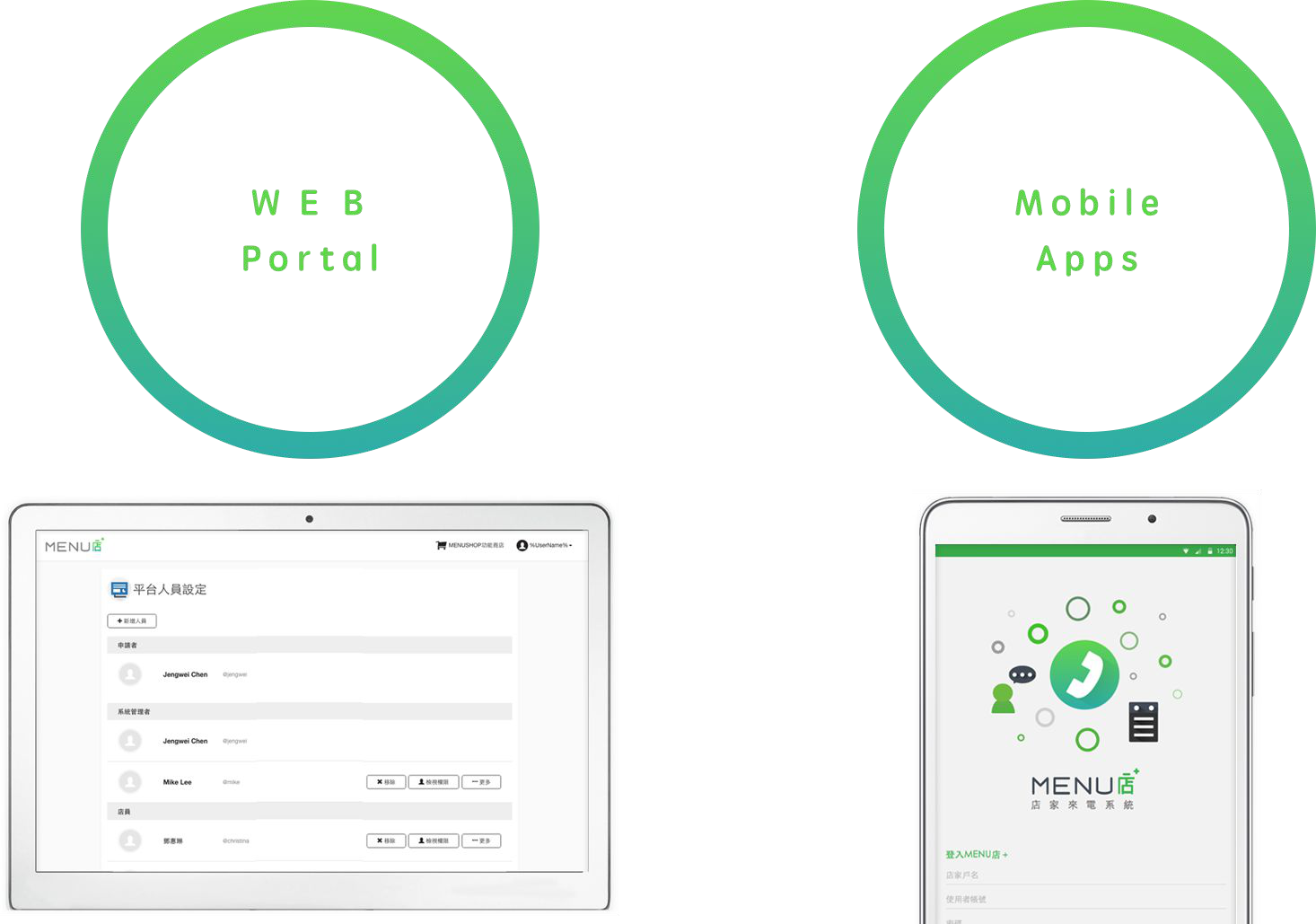

Whether information is entered by staff or collected through customer calls and reservations, MENUSHOP processes it automatically. This reduces repetitive manual work, saves time, and helps prevent errors.

Through ongoing interviews and usability testing, we identified operational challenges from the restaurant’s perspective. We then designed features that simplify customer service, staff management, and daily operations within one integrated platform.

Restaurant teams can use MENUSHOP on desktop browsers, phones, and tablets. Built for the pace of daily restaurant operations, it helps staff complete tasks quickly wherever they are.
幫助店家省時、省事、省錢,
協助會員管理、服務設計與精準行銷。
To build a sustainable business, we needed to create meaningful value for restaurants and establish a revenue model around their needs.
I designed MENUSHOP end to end including research, the product’s module strategy, the web portal and Android app, the marketing site and onboarding flow, and the MENUSHOP visual identity.
Most restaurants in Taiwan are run by small, fast-moving teams. Reservations arrive by phone, customer details are stored on paper or kept in someone’s memory, and routine tasks are handled manually. The result is a process that is time-consuming, tiring, and prone to errors.
The available tools were either generic systems that did not fit the way small restaurants operate or single-purpose products that did not work together. We set out to build one integrated platform that would save restaurants time, effort and money while helping them build stronger connections with their customers.
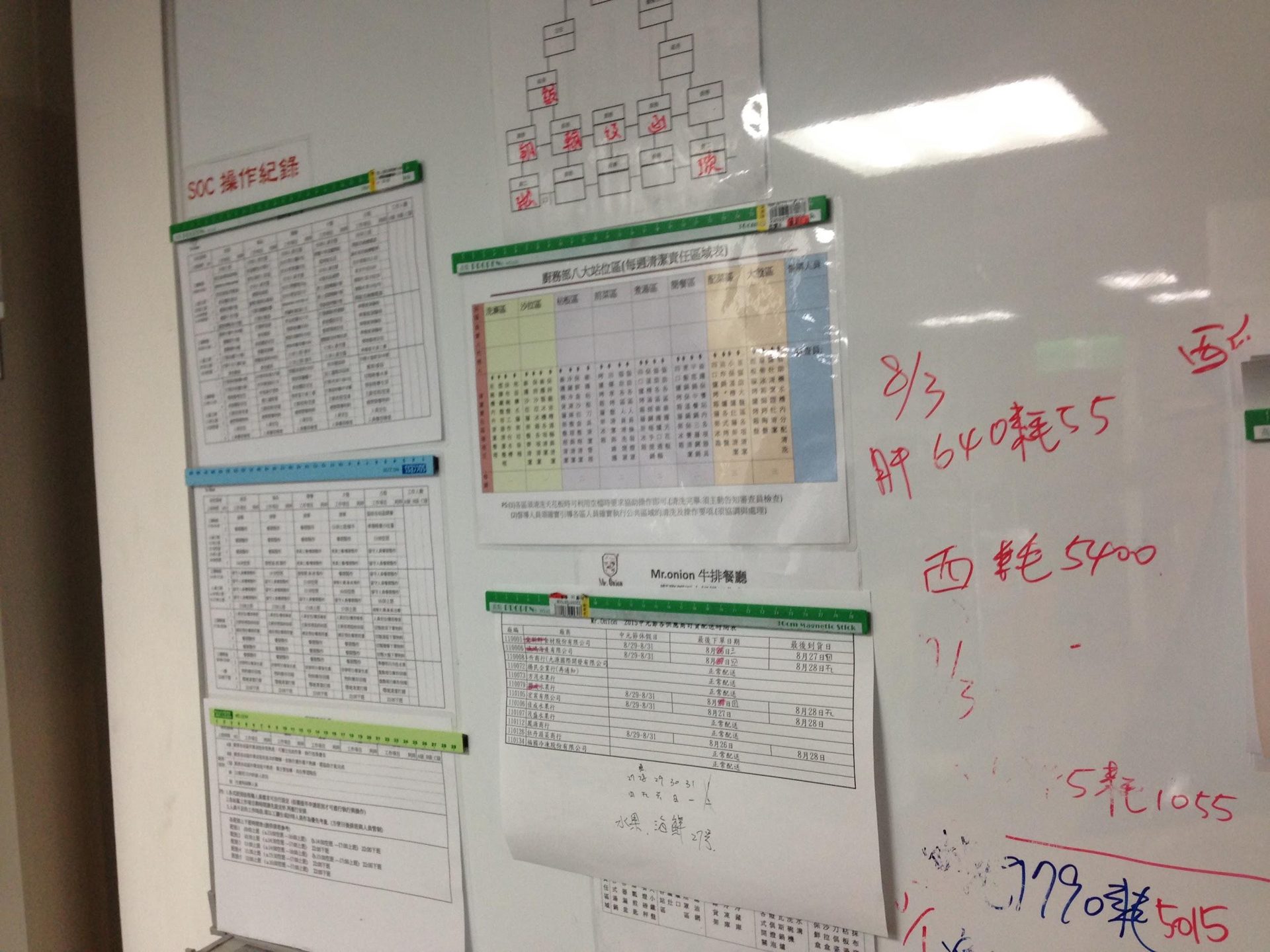
Before defining the product, we interviewed five restaurants to understand their business context, services, customers, and day-to-day operational challenges. Each interview informed a case study and scenario map that captured the realities of running a restaurant in Taiwan.
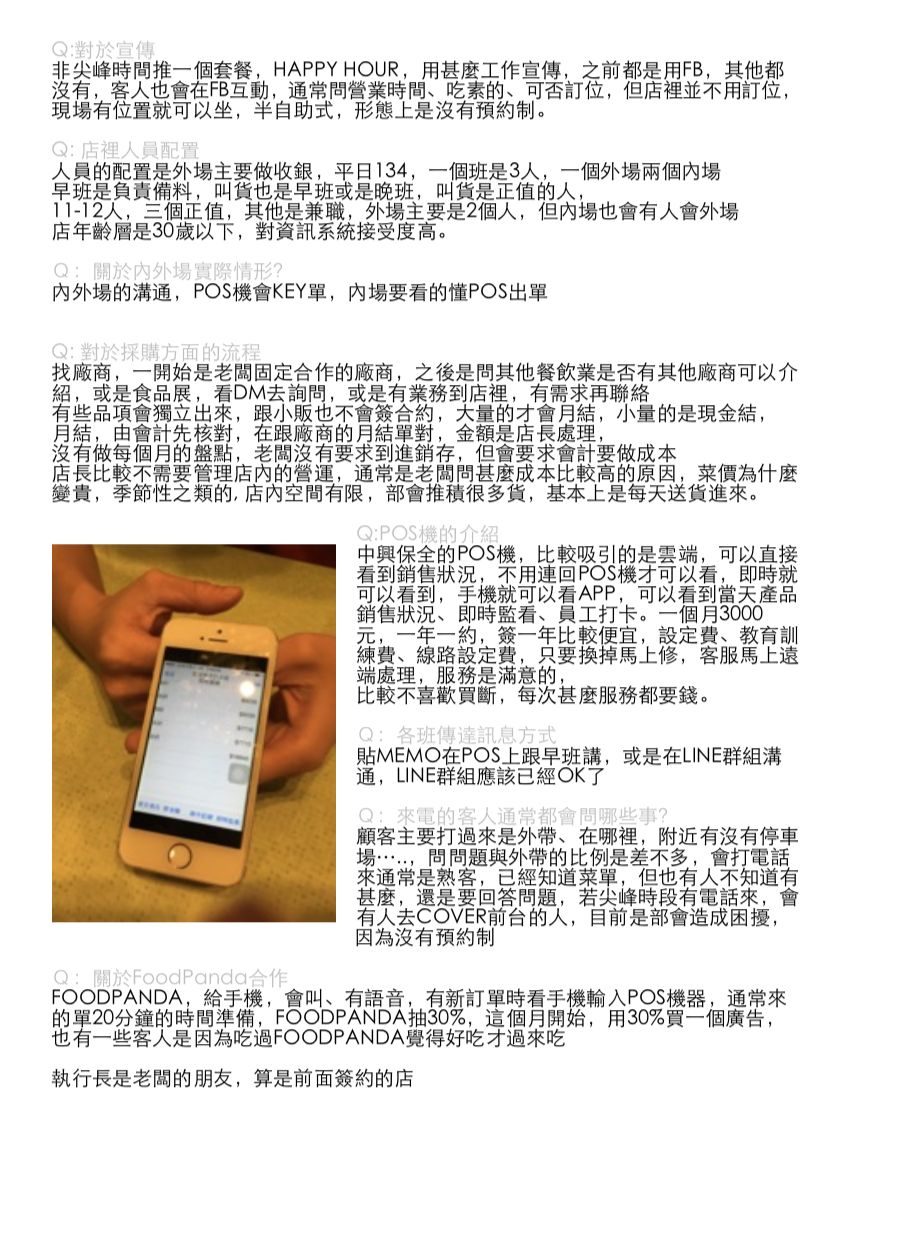
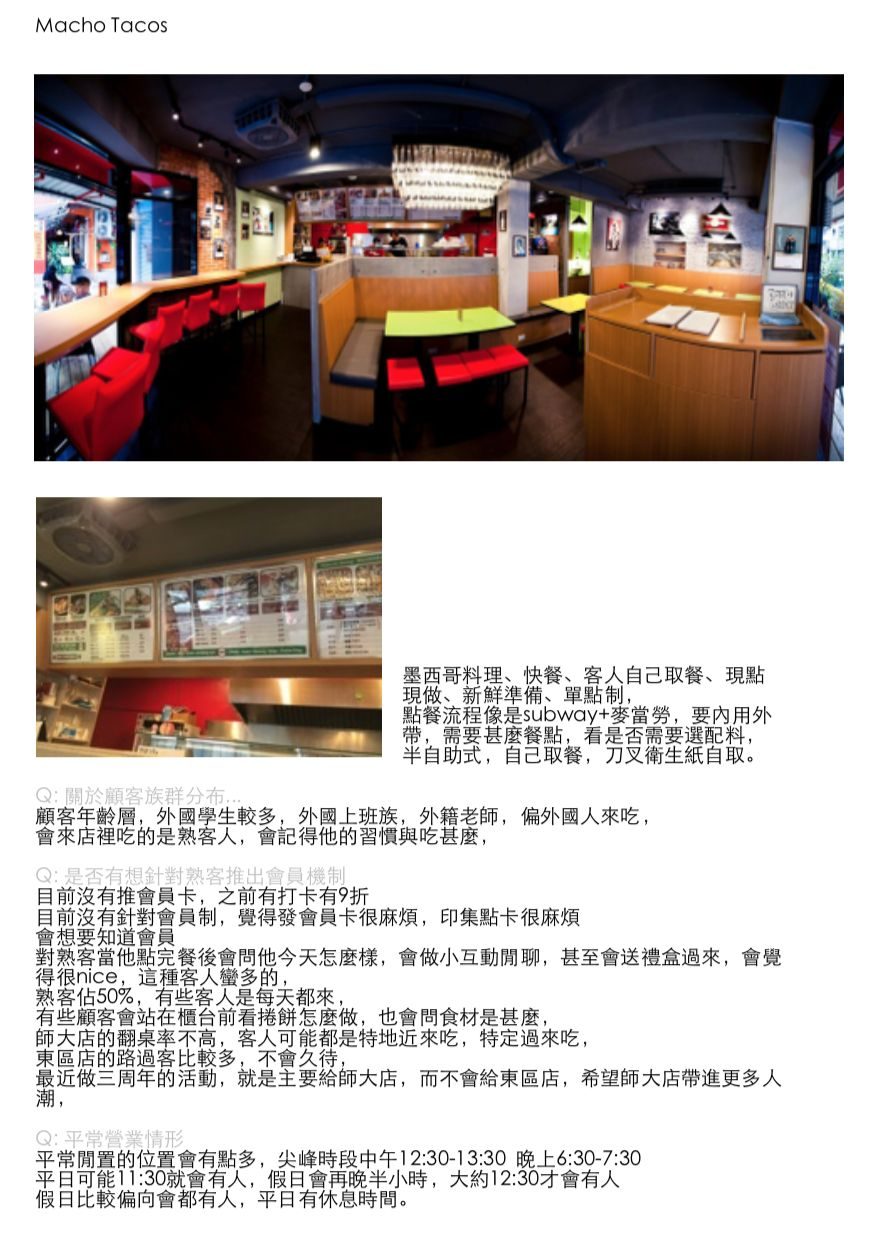
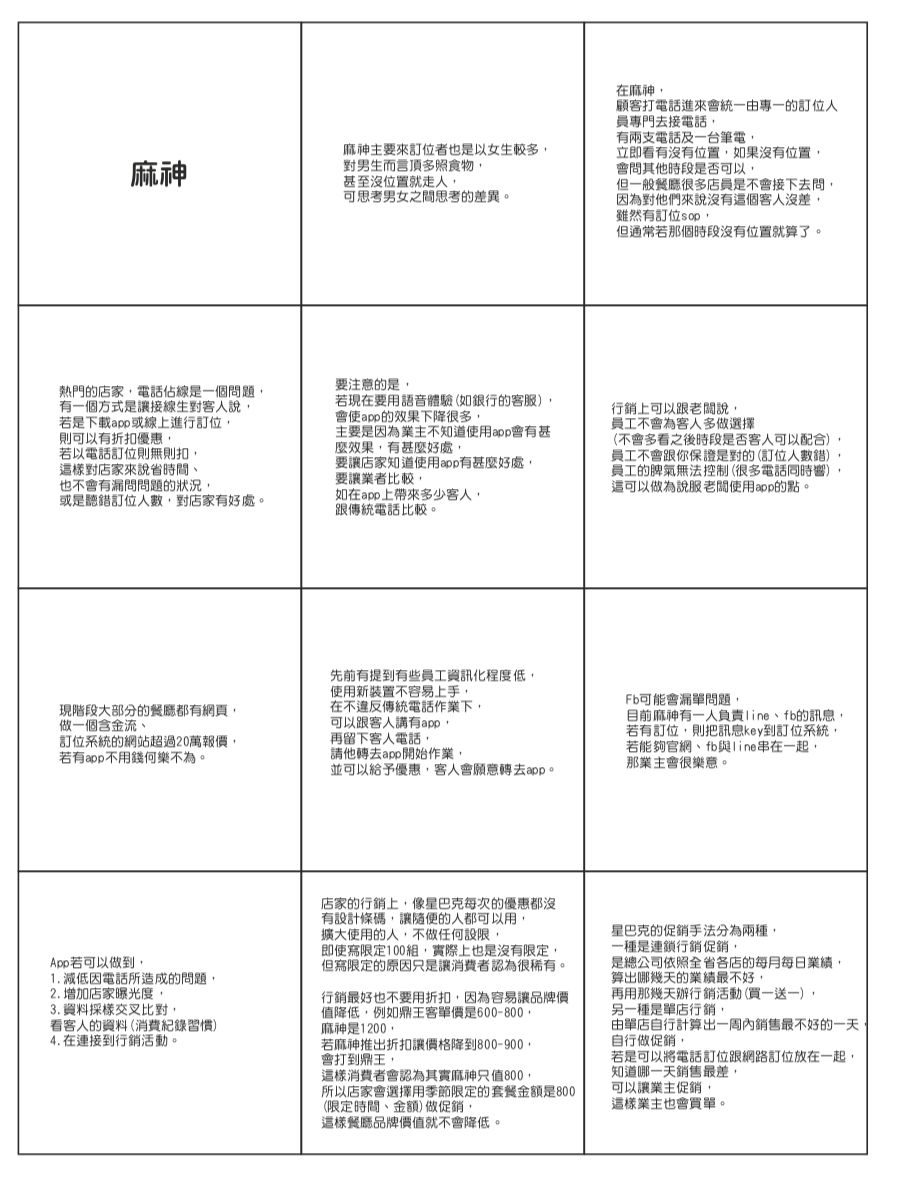
Interview notes · Case study of a Taiwan restaurant · Restaurant scenario map
Insight 01
Most reservations and customer enquiries arrived by phone. During busy hours, calls were often missed, and even answered calls were rarely recorded in a consistent way.
 Insight 02
Owners often knew their regular customers personally, but that knowledge was rarely documented in a place the wider team could access. As a result, it could not consistently support customer service or marketing efforts.
 Insight 03
A noodle shop, café, and taco bar each had different operational needs. A single all-in-one package would be overwhelming for some businesses and insufficient for others.
Our business model served both diners and restaurants. MENU helped restaurants reach diners and build
visibility, while MENUSHOP provided operational tools that restaurants were willing to pay for.
To support different types of restaurants, we designed MENUSHOP as a modular platform. Restaurants could
choose only the tools they needed, with full access starting at NT$3,600 per month.
exposure
⟷revenue

MENUSHOP, a modular platform where restaurants manage their MENU profile, customers, calls and reservations.
Each module addresses a specific operational need identified through restaurant research. Together, they share one account, one source of customer data, and one consistent visual system. Information from calls and reservations flows directly into each customer’s record, reducing duplicate work and keeping teams aligned.

Manage the restaurant’s MENU profile, including photos, business details, and updates.

Build customer records automatically from phone calls and reservations.

Record incoming calls, flag missed calls, and support timely customer follow up.

Create and manage reservations in one shared workspace for the whole team.

Invite team members and assign access levels, including applicant, manager, and staff.
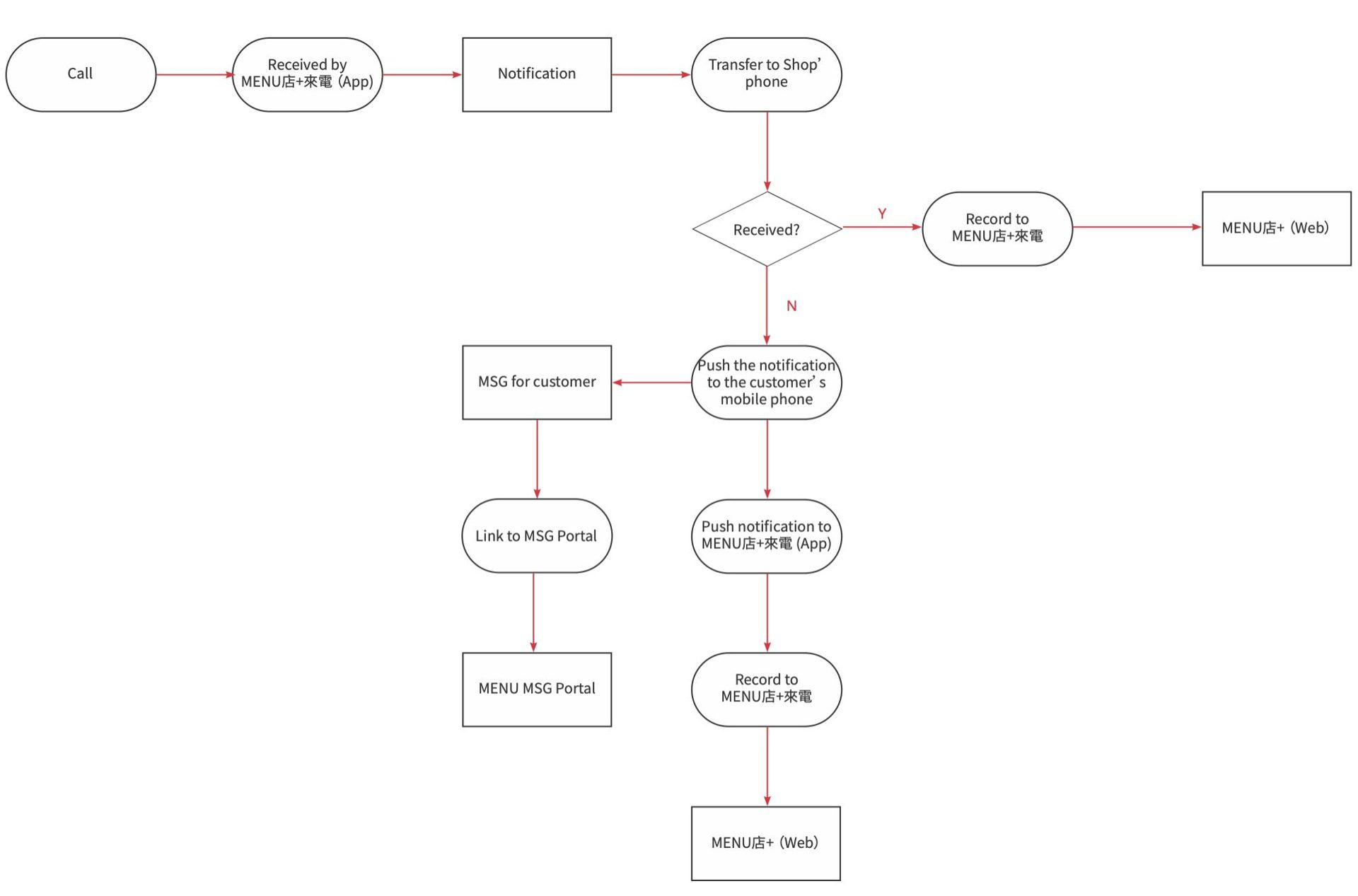
The call-management system connects the restaurant phone, Android app, and web portal. I first mapped the end-to-end flow, then designed the web and native experiences around two key outcomes: answered calls and missed calls.
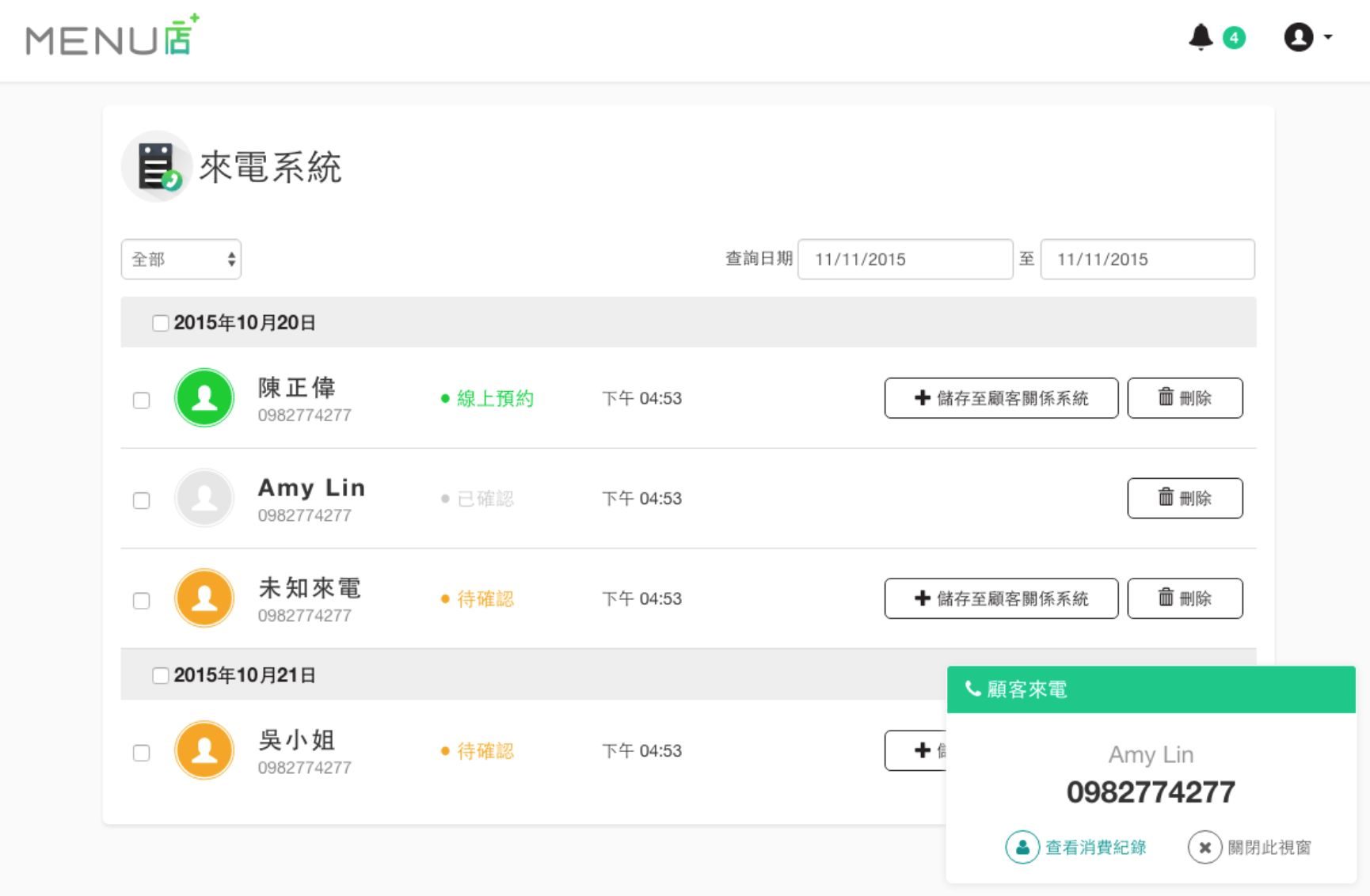
Web portal : A call log organised by date, with status tags, CRM saving, and an incoming-call pop-up.
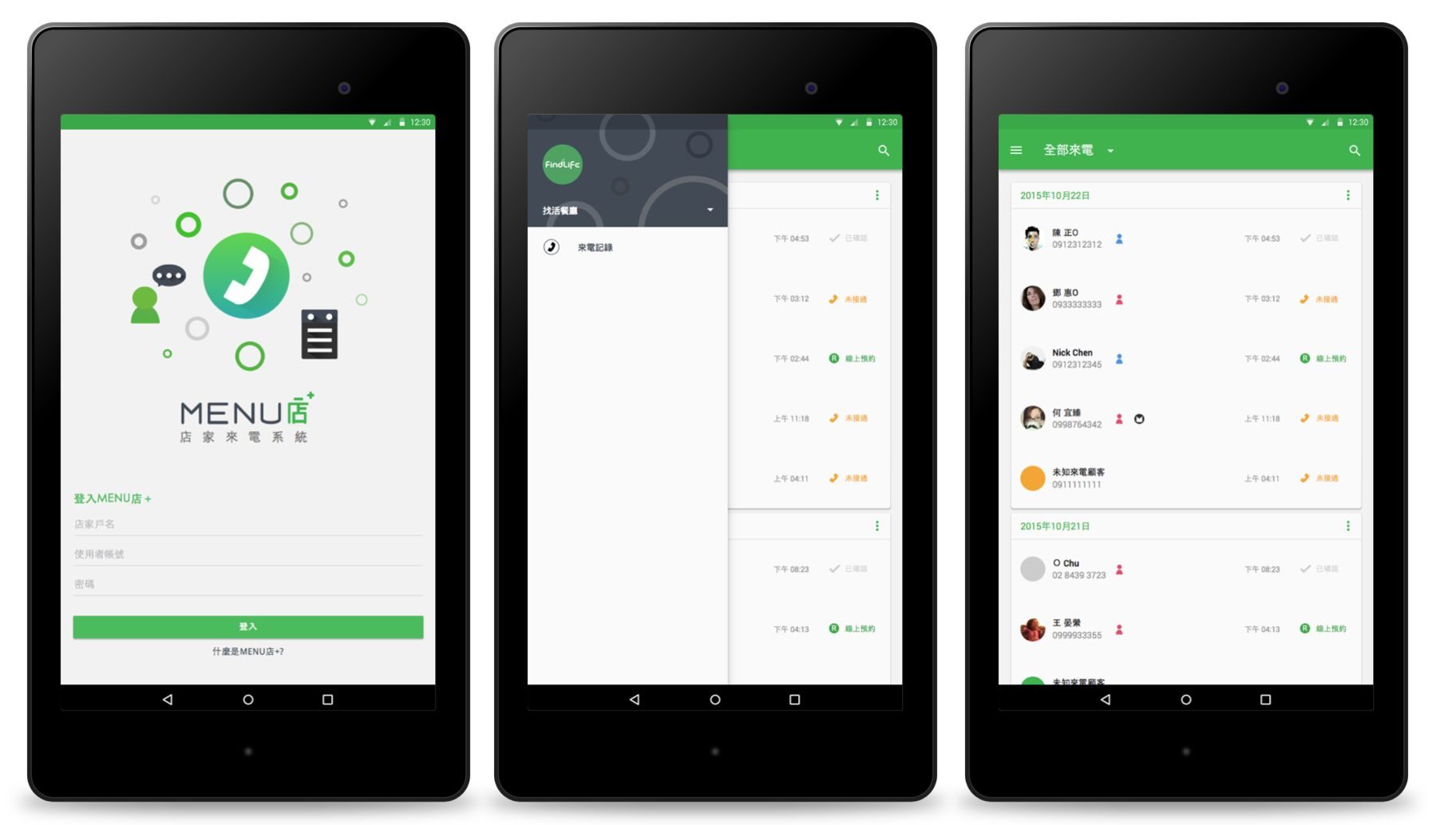
Android App: Sign-in, navigation drawer, and a day-by-day call list.
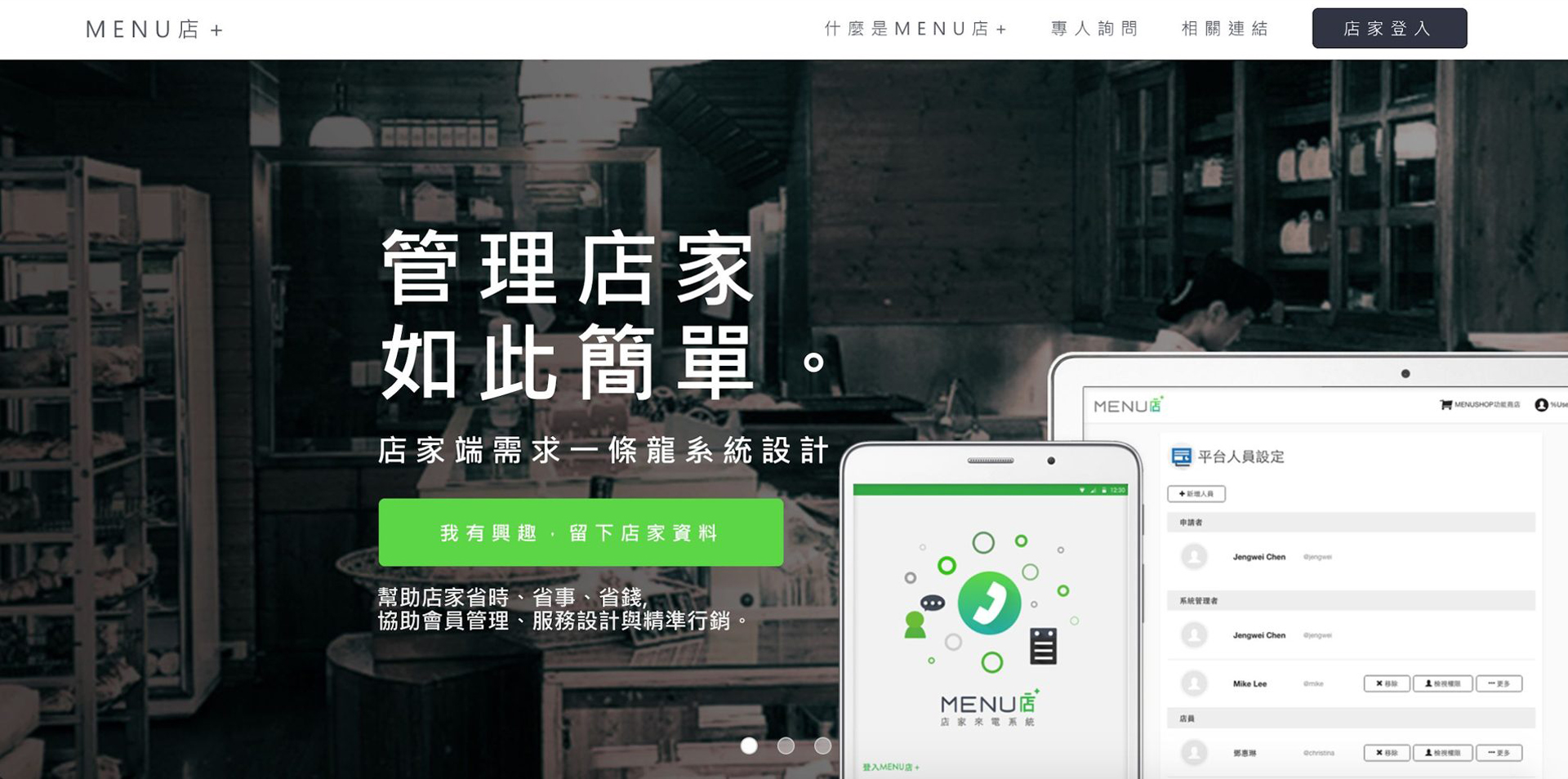
Restaurant owners are not looking for software for its own sake. They are looking for fewer operational headaches. The marketing site leads with that outcome, clearly explains the available modules and pricing, and makes personal support easy to access at every step.
MENUSHOP builds on MENU’s wordmark by adding 店 (“shop”) and a plus sign. A green-to-teal gradient distinguishes it as a practical, service-focused tool, while giving it a clear connection to the MENU brand. Each module has its own icon, helping restaurant teams recognise features at a glance.
Shop Green
#5CD646
Brand primary
Teal
#24ADA8
Gradient end
店+ Gradient
120° · Green → Teal
Logo & accents
Gray
#808080
Secondary text
Ink
#231F20
Primary text & UI
Mist
#F2F2F2
Icon plates & dividers
管理店家如此簡單。
管理店家如此簡單。
管理店家如此簡單。
Heiti TC on Mac · Segoe UI on Windows

PhoneCall · Reservation · CRM · MENU Profile · Settings
After creating the prototypes, we conducted usability testing with four restaurants. Participants generally responded positively to the design and proposed solutions, while also revealing scenarios the product did not yet support. We used this feedback to refine the modules, align them more closely with restaurant needs, and identify better solutions for future iterations.
restaurants
restaurants
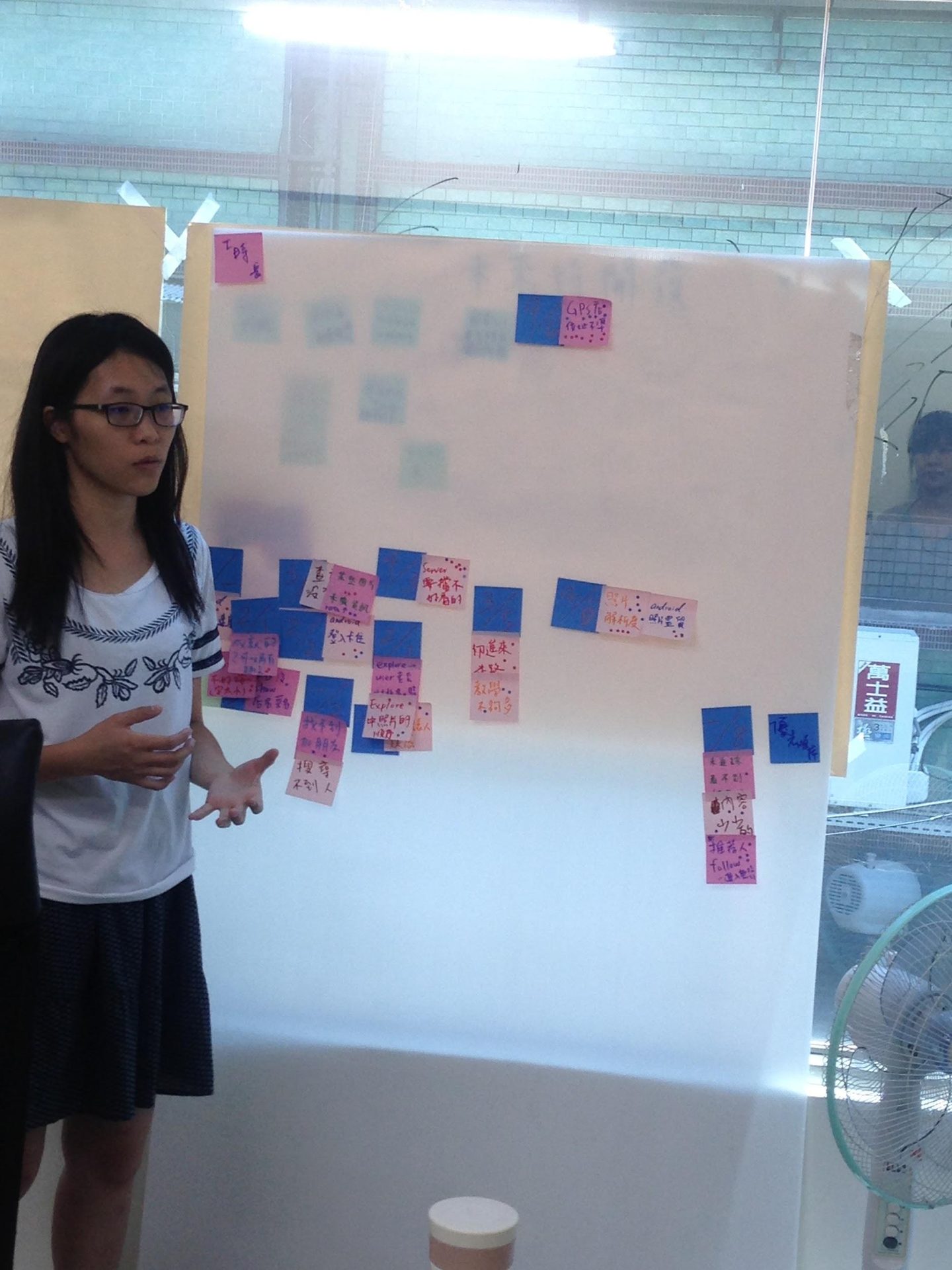
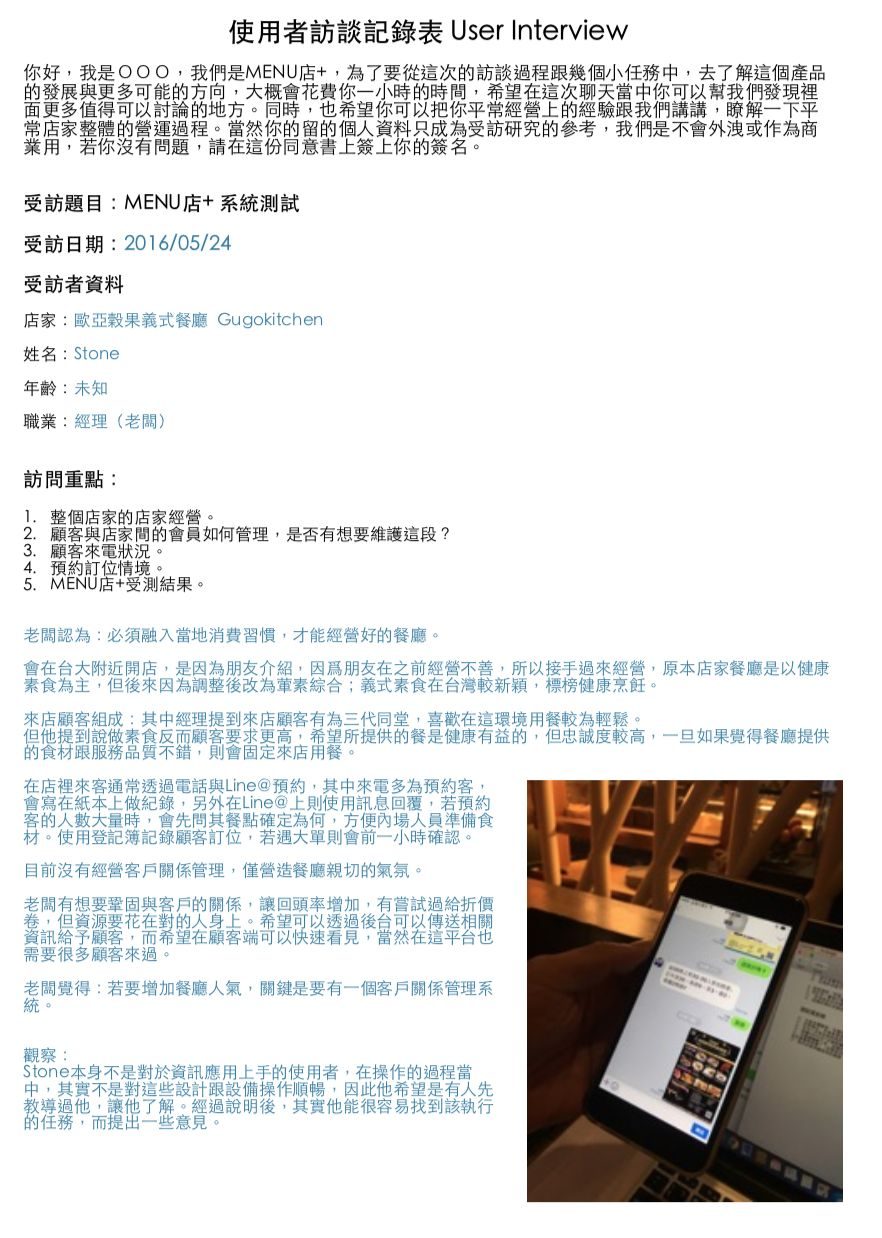
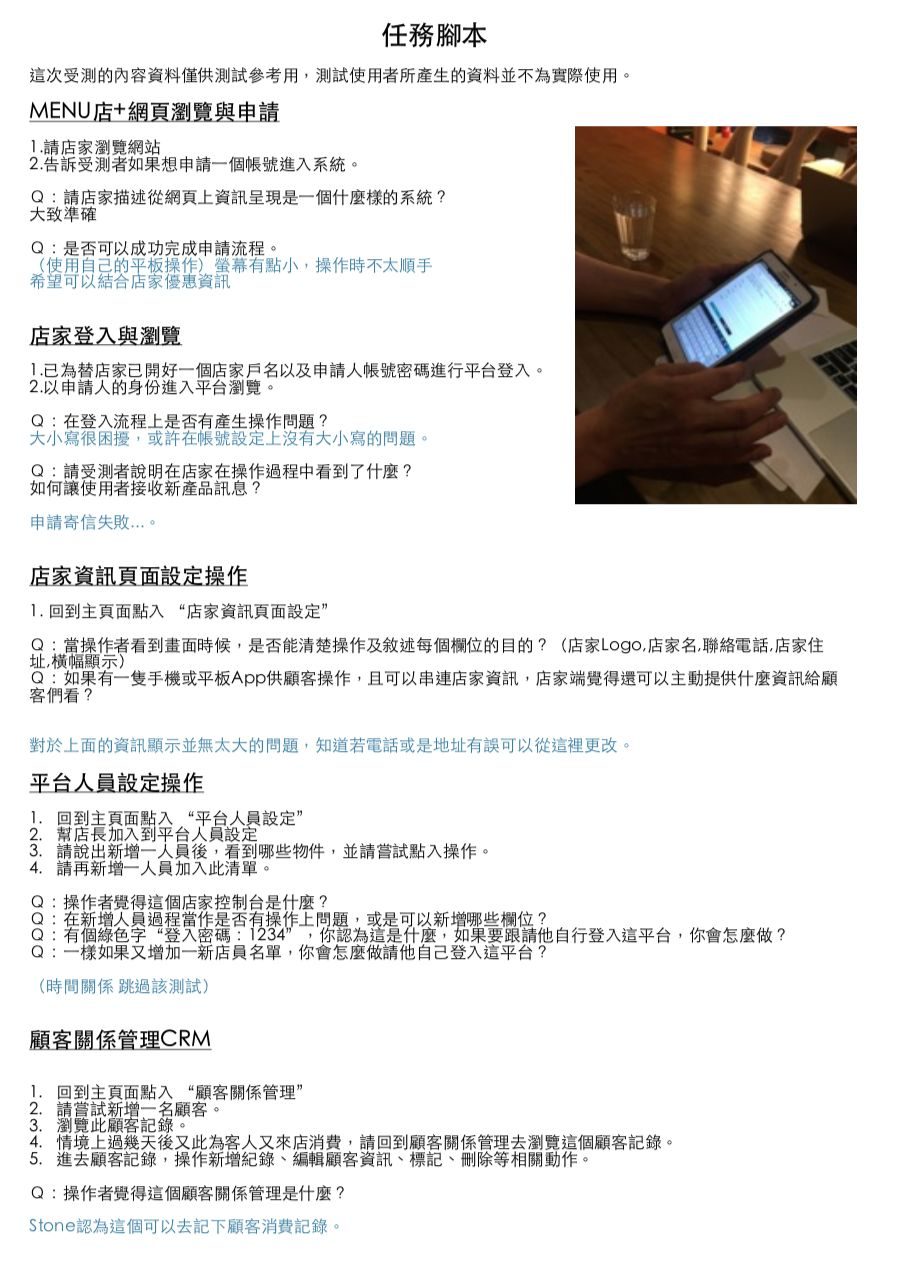
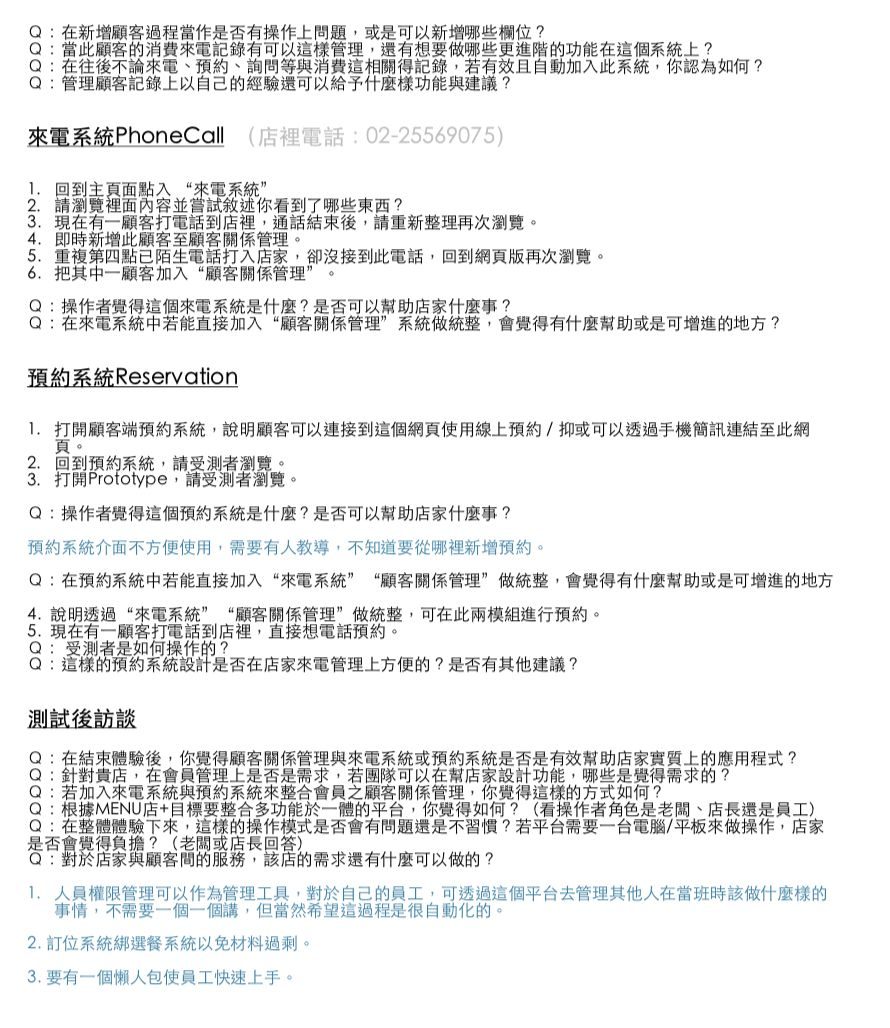
Synthesis wall · Interview record · Task scripts for each module